The Priesthood of Melchizedek

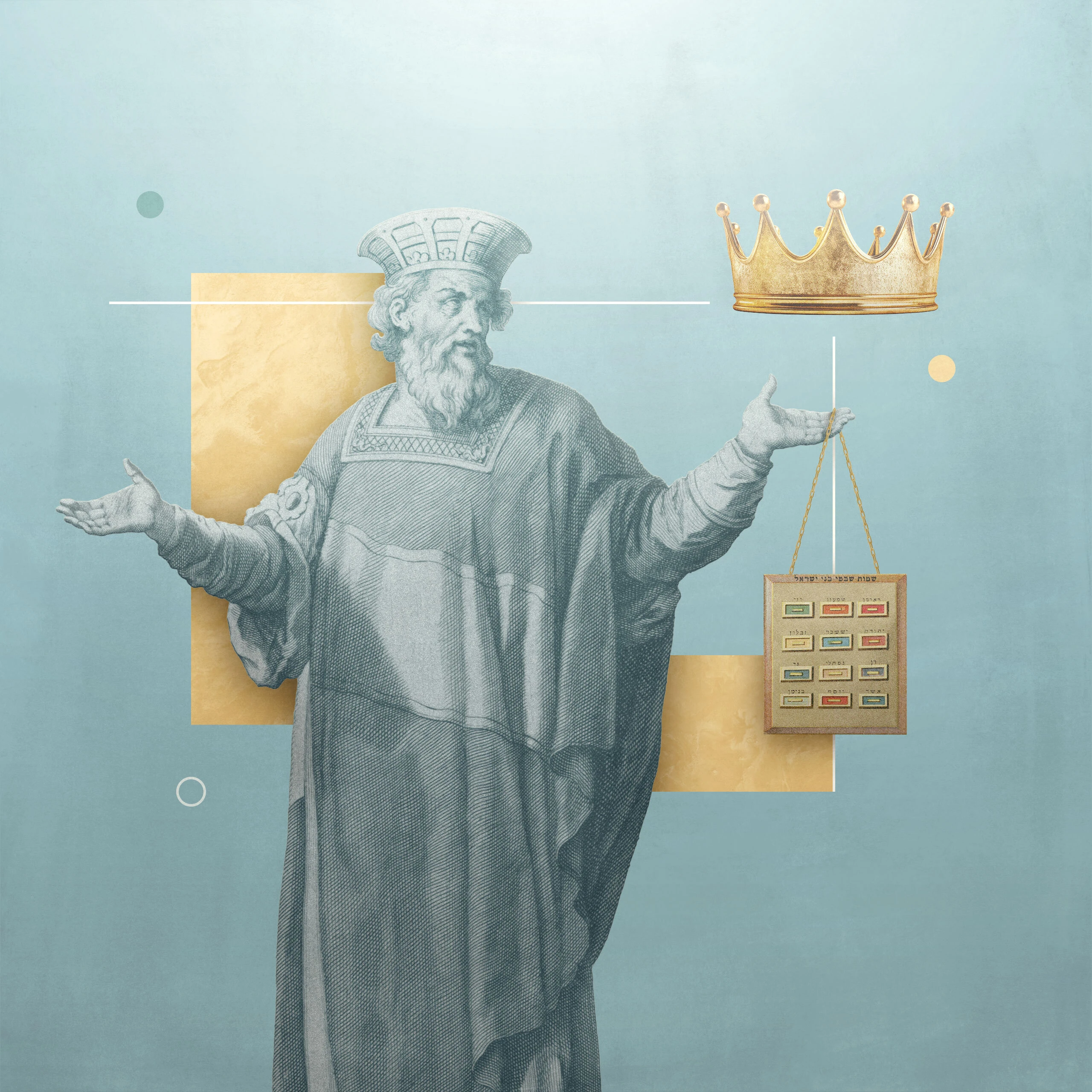
If the character Melchizedek appeared only in Genesis 14, we might think the passage to be one of those eccentric episodes in biblical history like that of Jabez in 1 Chronicles 4:9–10. Melchizedek appeared after Abram rescued Lot. He blessed Abram. Abram paid him tithes. The episode ended and Melchizedek was seemingly forgotten. Then his name appeared again some seven or eight centuries later in Psalm 110, a psalm of David. Again, he disappeared from biblical history. But then the author of Hebrews got hold of the story and the psalm.
The Levitical Priesthood
The author of Hebrews makes it clear that sinners needed a high priest. But in the Jewish Levitical religious system, there was already a high priest. Was that high priest not sufficient for the task? No. There were two problems with the Levitical high priest. First, he had his own sins to deal with. Second, he was mortal. Where was a sinless, immortal high priest to be found? The answer, of course, is in Jesus Christ. But how could Jesus be a priest? He was not of the tribe of Levi, but of the tribe of Judah.
The Priesthood of Melchizedek
The author of Hebrews found the solution to the conundrum in two places in the Old Testament. First, in the story of Melchizedek and Abram, he found a priest whom Abram recognized as a priest of the Most High God by receiving a blessing from him and by paying tithes to him. Second, unlike most persons in Genesis, Melchizedek had no named parent or descendant. Thus, as a type, Melchizedek appears as though he were immortal. Third, Levi, the descendant of Abram, implicitly paid tithes to Melchizedek, implying that Melchizedek was a greater priest than Levi.
But how was Jesus to be connected to Melchizedek? That is where Psalm 110 comes into play. The author of Hebrews notes that Jesus is identified as the divine Son in Psalm 2. Thus, when the Lord (Yahweh) spoke to David’s Lord (Adonai) in Psalm 110, He identified Him as a priest forever, after the order of Melchizedek. In that manner, Jesus is identified as the antitype, or the One foreshadowed by Melchizedek, who is the type.
What, then, is the character of the priesthood after the order of Melchizedek?
1. It is a combination office.
It combines the offices of priest and king. As Melchizedek was by name king of righteousness, he was also identified as king of Salem. This latter identification is as king of peace. It also connects Melchizedek with Jerusalem. For the author of Hebrews, this ties Melchizedek to Jesus as the King who brings righteousness and peace, while providing in Himself both righteousness and peace.
There is no need for a replacement for Jesus since He lives forever. He has been pronounced a priest forever.
2. It is a priesthood by oath, not by descent.
This is necessary because with this priesthood, there is no descent. This priesthood is an eternal priesthood. Jesus, by His resurrection, lives forever. This was shown in shadow by Melchizedek, who had no named descendants. There is no need for a replacement for Jesus since He lives forever. He has been pronounced a priest forever.
3. There is no lack in this priesthood.
This priest is able to save to the uttermost (Heb. 7:25). The ambiguity of the Greek word here is helpful. It can mean “completely,” as in “regarding all aspects.” Or it can have the sense of unlimited duration of time. The author of Hebrews deliberately combines the two senses, for Jesus saves not only with regard to all the aspects of the lives of those who are saved, but He also saves eternally.
The author of Hebrews draws the contrast between the priesthood of Christ (after the order of Melchizedek) with that of the Levitical priesthood. The former offered one sacrifice for all and for all time. That one sacrifice was fully effective. The latter had to offer sacrifices day after day, year after year. Those sacrifices were effective only in a shadowy way. They pointed the priest and the one bringing the offering to the One who would make a single full and complete sacrifice.
4. There is no weakness in this priesthood.
The Levitical high priests were men in their weakness. There is no weakness in Christ. He is seated at the right hand of the heavenly throne. He ministers in the true tabernacle. He does not serve a copy and shadow of the heavenly things, but the heavenly things themselves. Therefore, He serves His people in the full strength of His deity.