Noah Webster’s Dictionary
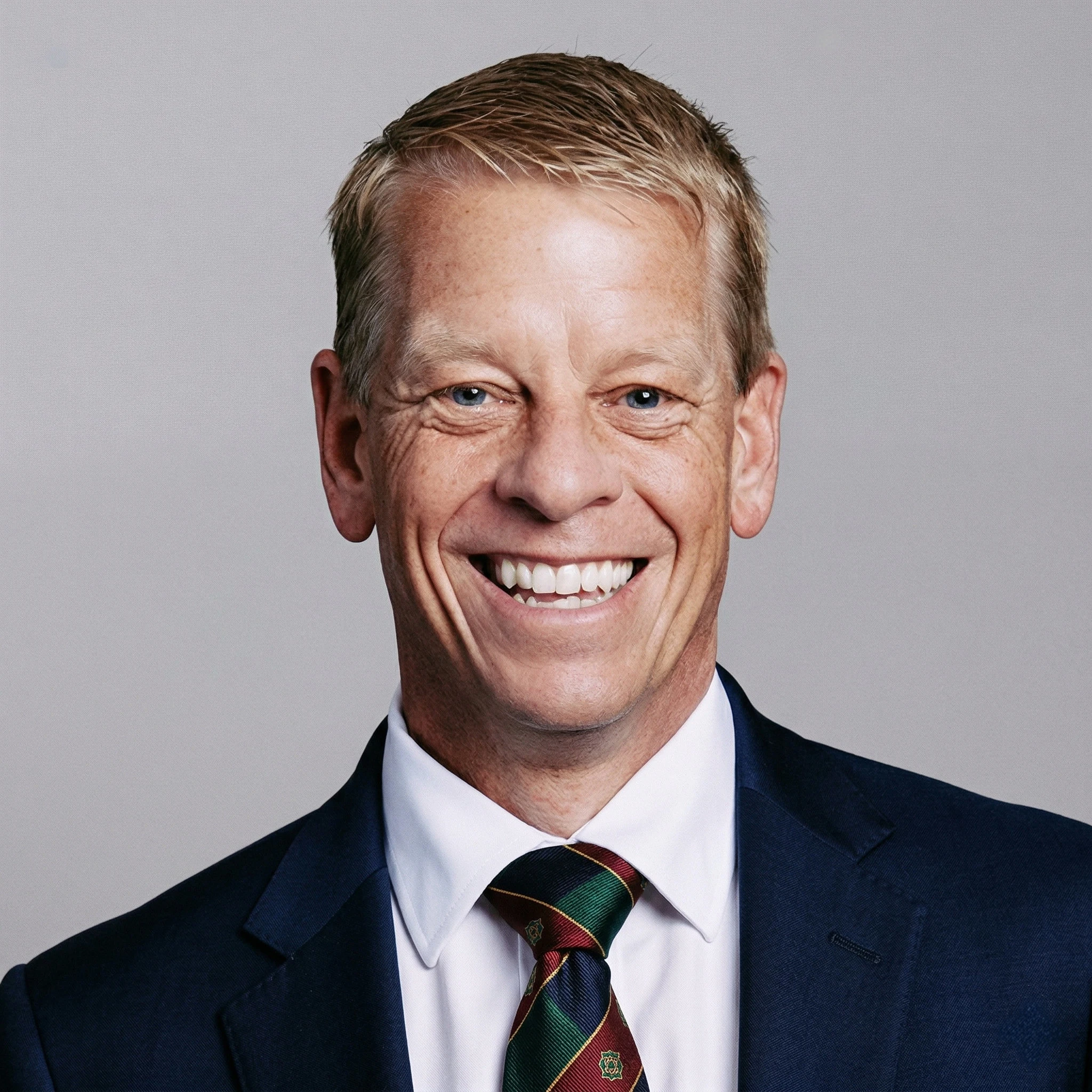
Who was Noah Webster, beyond the dictionary that bears his name? Today, Stephen Nichols explores Webster’s influence on American language and how his Christian convictions shaped both his life and his work.
Welcome back to another episode of 5 Minutes in Church History. In 1828, Noah Webster published his American Dictionary of the English Language. Back in 1755, Samuel Johnson served as the editor of an enormous undertaking, the Dictionary of the English Language, but by 1828, after America’s independency and into the federal period, Noah Webster believed America needed its own dictionary, and so he set out in 1828 and published his American dictionary of the English language.
Among the many interesting words in there, you’ll find the definition of “cat,” and it includes this, “The domestic cat needs no description. It is a deceitful animal and when enraged, extremely spiteful.” So, this is a very interesting dictionary, isn’t it? Noah Webster’s dictionary. He was quite the lexicographer, and as I looked up the word “lexicographer,” I realized that it was first used in 1603. And as an aside, it was used by George Downame, he was Bishop of Derry, and he first used the word “lexicographer” in 1603 in his book, A Treatise Concerning Antichrist. He was looking at the meanings of the preposition “anti,” and he references “Greek writers and lexicographers.” And he used that word to focus on the linguistic authority behind his argument, the argument he was making for naming the Antichrist, and of course, he concluded that the Antichrist was the Pope.
Well, I digress. Dictionaries can do that for me. I love going on chases of words through dictionaries, but back to Noah Webster. I mentioned his dictionary, but he wrote a couple other books of reports. One was his first book published in 1783. It’s known as the Bluebacked Speller. Original title was the American Spelling Book. It sold over 100 million copies. He was hoping to give American spelling and standardized spelling for this new country of America. It was Webster who changed “honor” and “color” with the ending of O-U-R to the much more simple O-R. He changed “musik,” M-U-S-I-C-K to simply M-U-S-I-C. He moved the RE ending on words like “center” and “theater” to E-R. A couple words failed. One, his spelling of “women” was W-I-M-M-E-N. That did not catch on. His spelling of “tongue,” T-U-N-G, that did not catch on. But that was his speller. In 1828 was his dictionary. In 1833, he published the Webster Bible, which was an update of the 1611 King James Version, and he Americanized all of the spelling and the words. And then in 1834, he wrote the book, Value of the Bible and the Excellence of Christian Religion.
Well, let’s talk about his life a little bit. He was born in 1758. He was turning 18 as America declared its independence. He attended Yale. He also served in the continental militia. He was by all accounts pompous. He visited Philadelphia at one point, visited with Benjamin Rush, and Benjamin Rush congratulated him on arriving in the city of Philadelphia. Noah Webster replied, “Sir, you may congratulate Philadelphia on the occasion of my arrival here.” He was pompous until 1807. As part of the early wave of the Second Great Awakening, revival was sweeping through the First Congregational Church of New Haven there in Connecticut. Two of his daughters converted, and they took their dad to church with them. He was in church and by his own account, he was arrested, and he made an entire submission to God. That was in 1808. It was a watershed moment in his life, a paradigm shift, a turning point, and Noah Webster was 50 years when it all happened.
Well, in his 1828 dictionary, he writes this about conversion. “Conversion is a turning from one condition to another.” And then he says, “The theological moral is a fundamental change of heart, subduing enmity toward God and adopting a life of holiness.” Well, that’s Noah Webster, his conversion, and his dictionary entry on conversion. And I’m Steve Nichols, and thanks for joining us for 5 Minutes in Church History.






Recent Episodes
5 Things Everyone Should Know About John Cotton: A Committed Congregationalist
March 18, 2026|Biography
5 Things Everyone Should Know About John Cotton: A Pastor’s Heart
March 11, 2026|BiographyTo Burma
March 4, 2026|Missionary BiographyThe Haystack Prayer Meeting
February 25, 2026|The Nineteenth CenturyNoah Webster: More Words
February 18, 2026|The Nineteenth Century401 Again
February 11, 2026|The Ancient Church