Did God Need to Kill His Own Son?

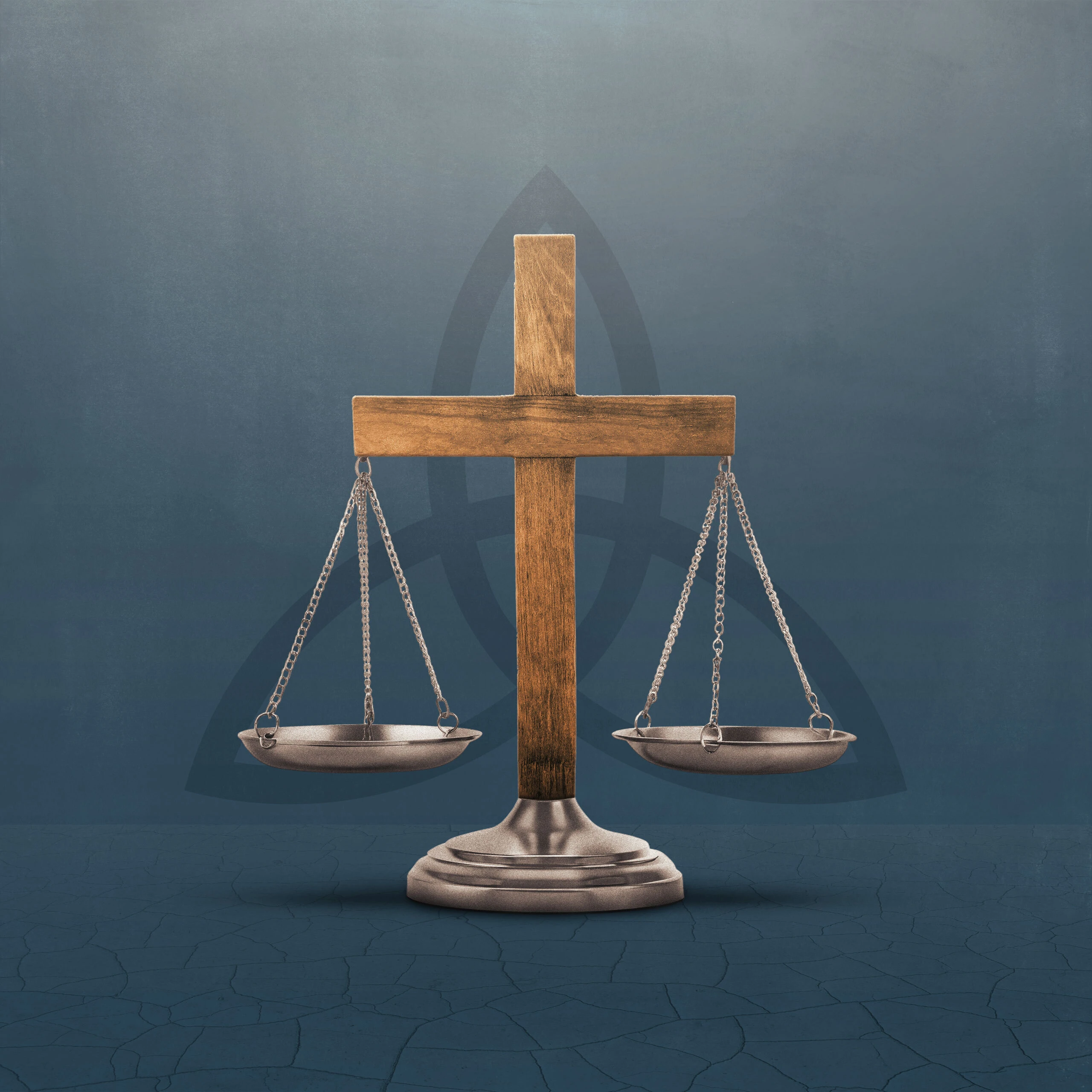
The question is evocative. That’s by design.
The way this question gets asked matters. Words like “need” and “kill” carry emotional freight. In popular usage, “kill” evokes a sense of arbitrariness, motivated by anger, revenge, or irrational emotion. We must understand that our theological language requires distinction from everyday language, or we may accidentally paint a picture of God the Father acting against the will of God the Son at the cross, which is certainly not true. But the emotional power of the language can shut down careful thinking before it starts.
That’s often the point. Critics of penal substitutionary atonement prefer stark language because it is provocative. For example, the phrase “cosmic child abuse” is designed to strike disgust, not to illuminate. We need to resist the emotional setup and think carefully. We need to be as precise as the Bible.
Let’s slow down and make some distinctions. Was the cross of Christ necessary—and necessary for what? Is God free to give His only begotten Son? Is He free not to? Can we even speak of God having a “need”? What force could require God to do anything? And is it right to say God “killed” His own Son at all?
So, let’s look at our question from multiple angles, like examining a diamond.
Does God need?
No. God has no needs.
By that, I mean God isn’t constrained by any external agent. There is no abstract moral law hovering outside Him like a Platonic form. God is utterly free—free to be who He is. He is eternal, unchanging, impassible, not composed of parts. He needs nothing to survive. He is free to create or not to create; free to give His only begotten Son or not.
God doesn’t save us because sinners demand it or because some cosmic law requires it. The cross flows from His loving nature as pure gift. He has, from eternity, determined to save sinners.
Could God save in another way than the cross?
Here’s where it gets tricky.
God’s gift of grace through the cross isn’t grounded in external constraint. But it is grounded in the reality of His own nature. While God is free not to save, because He chooses to save, He acts consistently with His eternally just and holy being.
Could God forgive sins without substitutionary justice? We have a desire to say “yes” because God, we surmise, can do anything. But God cannot lie. True freedom isn’t doing whatever you want willy-nilly. True freedom is being able to do consistently and perfectly what is true, good, and beautiful according to your nature and purpose.
God is free. Therefore, He does and must act according to His nature. He pursues justice. He lavishes love. In the cross, He lavishes love on sinners by enacting substitutionary justice upon His Son. The alternative—just forgiving without addressing justice—would be morally arbitrary. It would contradict who God is.
God poured out the wrath we deserved upon the Son, and the Son chose to give Himself for us.
So, did God need to give His only begotten Son? No—not in any sense of an external constraint to save. And yes—because once He decided to save, He acted according to His holy nature.
The only “need” is that God must act according to His own righteous character. He needed to give His Son unto death so that He could satisfy His desire to save sinners while remaining just.
In brief, since God has determined in His free love to save sinners, He must meet the demands of His justice through the substitutionary death of a sinless sacrifice if He is to offer forgiveness to the unjust.
Did God “kill” His Son?
This is where the emotional setup reaches its peak. Claims of “cosmic child abuse” depend on emphasizing God the Father as the aggressive agent killing the passive Son. But that misconstrues what the Bible teaches.
First, notice that the Bible doesn’t use this language: “God the Father killed God the Son.” Instead, Scripture holds together two truths: (1) Christ freely offered Himself, and (2) God the Father gave His only begotten Son so that whoever believes might not perish.
“He . . . did not spare his own Son but gave him up for us all” (Rom. 8:32). But this is a complex question. Who killed Jesus Christ?
Of course, the Roman state did. The high priest did. The crowd that yelled, “Crucify Him!” did. And Peter says to the assembly at Pentecost, shockingly, “You crucified him” (Acts 2:36). By extension, all sinners who hear the gospel with saving faith realize that we crucified Him.
But did God? Yes. God poured His wrath upon the Son—a death even beyond what eyes can see. God the Father gave Jesus over to death and punished Him fully with divine wrath. And the Son willingly, for the joy set before Him, endured the cross and received the wrath of the triune God (Heb. 12:2). Let’s say it in Scripture’s own language:
We esteemed him stricken,
smitten by God, and afflicted.
But he was pierced for our transgressions,
he was crushed for our iniquities. (Isa. 53:4–5)
God put [him] forward as a propitiation by his blood. (Rom. 3:25)
This Jesus [was] delivered up according to the definite plan and foreknowledge of God. (Acts 2:23)
To deny that God punished Jesus according to the wrath our sins deserve or to ignore that the Son of God gave Himself voluntarily is to ignore the plain teaching of Scripture.
Why isn’t this “cosmic child abuse”?
Let me offer three reasons: First, the death of Jesus is voluntary. The Son chose this in love for us. Second, the cross is the historical fulfillment of Trinitarian agency according to the one will of the one God (the pactum salutis). The Father, Son, and Spirit are not at odds in their purposes. Third, the resurrection vindicates Jesus Christ, confirming that He deserved to be freed from death. God’s justice was satisfied, so Jesus must rise from the dead.
The Father did not “kill” the Son against the Son’s will. God poured out the wrath we deserved upon the Son, and the Son chose to give Himself for us. That’s an altogether different picture than cosmic child abuse. It is divine love, amazing love. We can only say, “How can it be?”
God satisfied His own justice at His own cost. It is not vindictiveness but love that motivated the whole plan. With all those distinctions in place: Yes, God gave His Son over to death. God poured out His wrath on His Son. God did not spare Him. Thus, justice and love met at the cross for our sake.1
-
Editor’s Note: This article was originally published on February 4, 2026. ↩