Judges is a book of history. Much of the Old Testament recounts the checkered history of lsrael, beginning with its patriarchal ancestry, to its birth as a nation, to its national demise under foreign rule. When we read Old Testament history, it is important to remember that there is more to it than simple facts about dates, characters, or events. The Apostle Paul underscored this when he wrote to the Roman Christians that “whatever was written in former days was written for our instruction” (Rom. 15:4) and similarly to the Corinthians that what happened to Israel was an example “written down for our instruction, on whom the end of the ages has come” (1 Cor. 10:11). Psalm 78 shows that this was not just a Pauline assessment. The psalm recounts Israel’s history from the exodus to David’s monarchy. Before the historical account, however, the psalmist said, “I will open my mouth in a parable; I will utter dark sayings from of old” (Ps. 78:2). In other words, the facts of history pointed to something below the surface. Certainly, biblical history is reliable and accurately records facts about real people, places, and events, but its purpose is to communicate spiritual lessons and to call for a spiritual response. In the Hebrew Bible, the placement of Judges and other historical books in the section of the canon called the Prophets suggests that there was more to the stories than what appeared on the surface.
So in reading Judges, we must discern the spiritual purpose, which is going to be in keeping with Scripture’s overall redemptive purpose. Genesis 3:15, the protoevangelium (the first gospel), is the key to discerning God’s purpose in Old Testament history—indeed, of all history, including modern history and the history that is yet to happen. Immediately after Eve yielded to the serpent’s temptation and Adam plunged humanity into the curse of sin by joining her in eating the forbidden fruit, God announced to the serpent His unfailing plan to reverse that curse:
“I will put enmity between you and the woman,
and between your offspring and her offspring;
he shall bruise your head,
and you shall bruise his heel.” (Gen. 3:15)
Redemptive history traces the tension and hostility between the two seeds and the certain success of the Seed of the woman, Christ. Much of Old Testament history reveals Satan’s relentless attempt to thwart the gospel and God’s unstoppable resolve to fulfill His purpose in the gospel. There is a sense in which all Old Testament history is progressing unfailingly and steadily from the fall to the fullness of time when Christ will come to reverse the curse. Old Testament history, including Judges, is conclusive proof of God’s unfailing purpose and plan. In many ways, the book of Judges is dark and distressing. At many points during the period of the judges, it appeared that the darkness would prevail, threatening and jeopardizing the progression of God’s redemptive plan. But there was a light to shine in the darkness. Even the dark days of the judges assured, “Here comes Jesus.”
When regarding Old Testament history, we always face the challenge of the gap between the ancient account and the modern setting. On the surface, some things in the Old Testament appear to be without value or relevance to the church, being either outdated, such as how to offer sacrifices, or even offensive, such as the divine command to destroy the Canaanites. But bridging the gap between the “then” of Judges and the “now” of today is not particularly difficult. There are many obvious parallels between then and now with both collective and individual implications. The closing statement of the book sums up modern society as well as ancient Israel: “Everyone did what was right in his own eyes” (Judg. 21:25). The subjectivity of “truth” is the mantra of our day. The common advice is to be true to yourself. Those who are guilty of the most heinous and perverted lifestyles or behaviors are lauded for “doing their personal truth.” There is no sense of absolutes. The account of the Levite and his concubine in Judges 19 exposes the lewd immorality that characterizes the period of the judges. Today, premarital and homosexual relationships, public immodesty, and all sorts of indecency are accepted norms with no reference to God’s law. Israel’s war with the tribe of Benjamin in chapter 20 parallels the civil discord, unrest, and divisiveness that plague much of life today. Deborah’s reference to abandoned highways and travelers’ taking back roads (Judg. 5:6), seemingly to avoid robbery or violence, hints at the kind of crime, chaos, and lawlessness that characterizes our day. There is hardly a safe place to escape the rampant violence. Cities are war zones, schools are easy targets, political protests threaten peace, and crimes of all sorts defy the rule of law as greater sympathy is shown for criminals than for victims. The similarities between then and now are disconcerting and almost eerie. Certainly, the parallels highlight the relevance of Judges for our consideration. Judges is an ancient book with a modern message.
To miss seeing Christ in the prophetic book of Judges is to miss the principal message: Christ is the Light in the darkness.
Undeniably, Judges portrays the dark ages of Israel’s history, but the darkness is only part of the story. The title of the book is itself a harbinger of hope and a ray of light shining into the darkness. For us, the thought of judges conjures up images of black-robed magistrates sitting behind elevated benches rendering decisions on civil or criminal matters and maintaining order in a court of law. Yet the Old Testament judges were not arbiters or judicial officers but leaders who had the necessary skills to deliver the nation from foreign oppression and domination. Judges 2:16 gives a functional definition: “Then the Lord raised up judges, who saved them out of the hand of those who plundered them.” Thus, the judges played a vital role in God’s redemptive plan and purpose. Although it appeared that the sins of the Israelites and their subjugation to hostile forces jeopardized the progression of God’s promised plan, there had to be an Israel for there to be the Christ. The Apostle Paul expressed this link between Israel and Christ unequivocally: “They are Israelites . . . To them belong the patriarchs, and from their race, according to the flesh, is the Christ, who is God over all, blessed forever. Amen” (Rom. 9:4–5).
God equipped and used the judges to preserve Israel and thus to vouchsafe His promise of the coming Curse Reverser even in the darkest of times. Neither Israel’s sin nor outside opposition could thwart the divine promise. The recurring cycle of rebellion (sin), retribution (servitude), repentance (supplication), and restoration (salvation) heightens the fact of the Lord’s resolve and unwavering faithfulness to keep His word and to advance His kingdom. The book of Judges illustrates well the chorus of the hymn “His Mercy Is More”:
Praise the Lord, His mercy is more.
Stronger than darkness, New every morn.
Our sins they are many, His mercy is more.
The book of Judges testifies to the amazing truth that where sin abounded, grace superabounded (Rom. 5:20). The events and characters in the pleasant book of Ruth date to the period of the judges, testifying to the brightness of the light shining into the darkness.
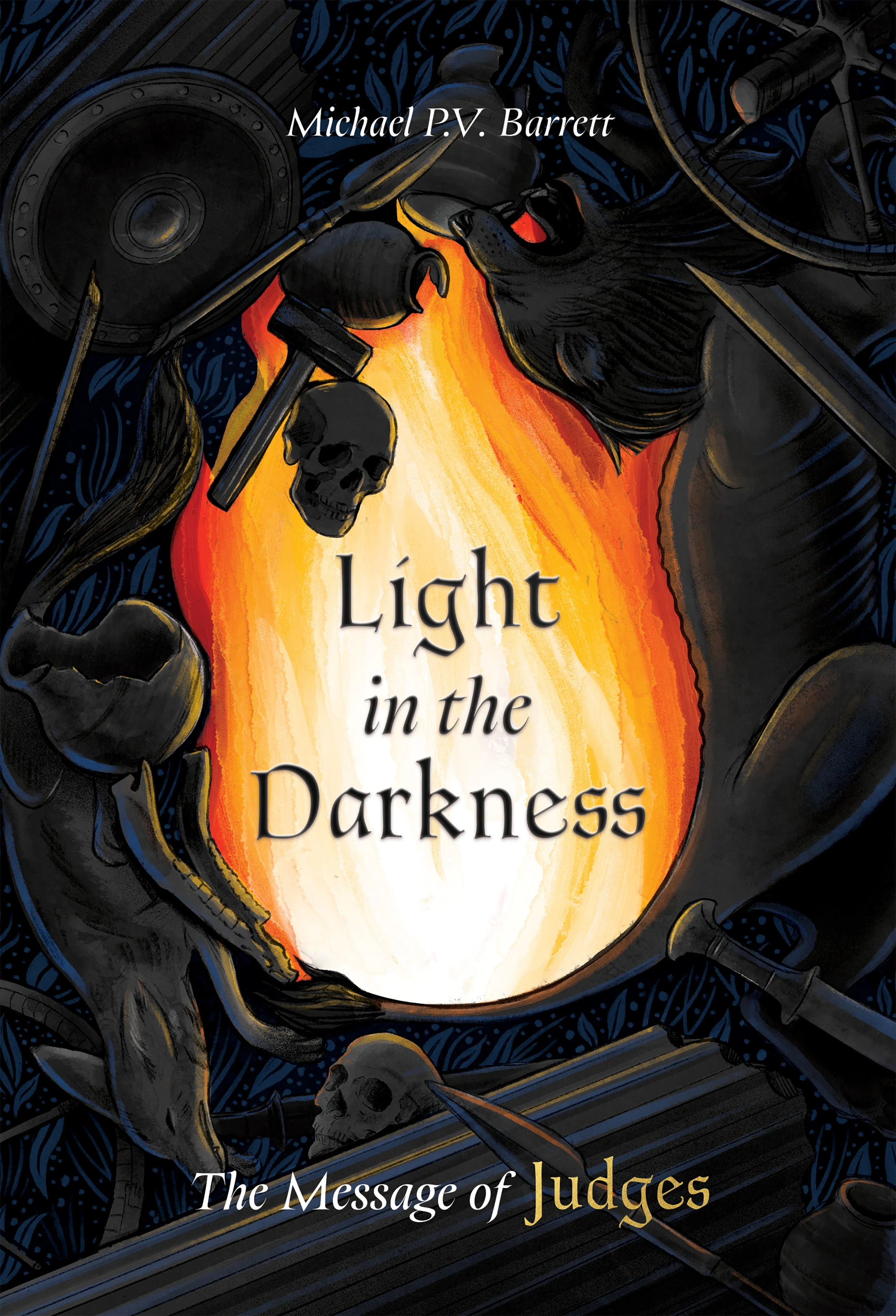
The dual themes of Israel’s recurring sins and God’s persistent faithfulness justify the title of my book: Light in the Darkness: The Message of Judges. Judges speaks to both society and individuals. There is no modern nation that equates to the ancient covenant people, but God’s assessment of and dealing with that ancient nation is illustrative of how He holds all nations to account and uses even pagan peoples to accomplish His purposes. There are significant lessons for individual believers as they struggle against the sins that impede their sanctification and enjoyment of divinely intended blessings. This book will seek to highlight the spiritual lessons from the sordid yet shining history of the judges. This is not a commentary that addresses every section of the book in sequence. There are both modern and old commentaries that are most helpful for sequential in-depth study. Although some passages will be considered in detail without being overly technical, an overview of the book’s message will highlight themes, principles, and examples of the salient lessons to learn from Judges. Not the least part of the message of Judges is what it reveals about the coming of Jesus. According to the interpretational guideline given by the resurrected Christ to those on the road to Emmaus, He is the theme of the whole Old Testament: “And beginning with Moses and all the Prophets, he interpreted to them in all the Scriptures the things concerning himself” (Luke 24:27). Therefore, to miss seeing Christ in the prophetic book of Judges is to miss the principal message: Christ is the Light in the darkness.