Who Was Charles Haddon Spurgeon?

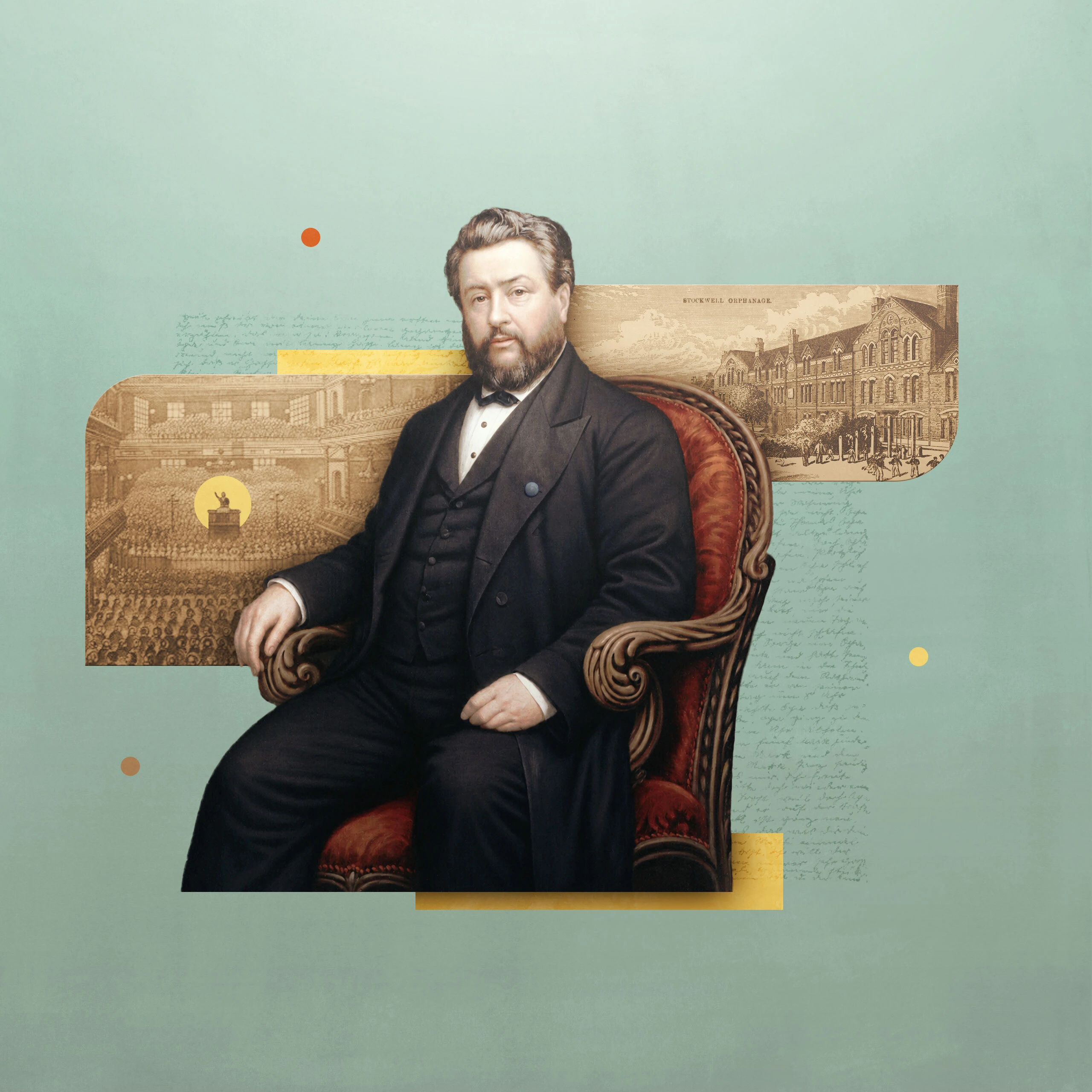
Charles Haddon Spurgeon (1834–92) is widely considered the greatest preacher of the nineteenth century. Few figures in church history enjoyed a wider reach in their day and few have enjoyed more popularity since their death than Spurgeon. Today, his name is practically synonymous with gospel preaching. He is regularly quoted in sermons, books, articles, and on social media.
Who was this great man, and what is his story?
Spurgeon was born in Kelvedon, Essex, about fifty miles east of London, on June 19, 1834. He was the first of seventeen children, only eight of whom survived infancy. He was born to godly parents, John and Eliza, who raised him in the fear and admonition of the Lord. His mother had an especially strong influence on him.
When Spurgeon was fourteen months old, he was sent to live with his grandparents in the village of Stambourne. He lived there until he was six. His grandfather, James, who was something of an old-fashioned Puritan preacher, played an enormous role in shaping the young Charles. Many of Spurgeon’s earliest spiritual impressions were formed while living with his grandparents and sitting under his grandfather’s preaching.
When Spurgeon was fifteen, he was powerfully converted. On Sunday morning, January 6, 1850, he set out from his parents’ home in Colchester in the midst of a snowstorm to attend a nearby church. He only made it a short distance before realizing he had to move indoors due to the severity of the storm. He turned down a side street and sought refuge in the local Primitive Methodist Chapel. He was greeted by a small band of a dozen or so who had braved the weather. The man who was to preach that day was hindered by the storm, so instead a layperson stood up to preach that morning’s message. This humble man became the unexpected instrument God used to save Spurgeon. He preached from Isaiah 45:22: “Look unto me, and be ye saved, all the ends of the earth: for I am God, and there is none else” (KJV). As this Primitive Methodist layman pleaded with sinners to look to the Savior for the forgiveness of sins, Charles Spurgeon was born again and embraced Christ by faith.
Not long after his conversion, Spurgeon himself started to preach. Before long, he developed a reputation as the famous “boy preacher” of the countryside. So compelling was his preaching that at the age of seventeen, a Baptist church in the village of Waterbeach called him to be their pastor. At the time the church had only a few dozen in attendance. At the end of his two-year ministry there, the church had grown to over four hundred.
Christ was offered to the common people of London with such bold and free expressions of the love of God toward sinners that many could not help but be drawn to it.
News of the young preacher eventually made its way to London to the deacons of New Park Street Chapel. They invited Spurgeon to preach and eventually extended a call to him in 1854. He was nineteen years old when he agreed to become the church’s pastor. He would minister there for the next four decades. When Spurgeon first arrived at the church, the congregation had 232 members. When he died thirty-eight years later, the membership sat at 5,311. The church received a total of 14,461 members over the course of his ministry, nearly three-quarters of whom were added through baptism. In 1861, the church erected a new building to accommodate the congregation’s explosive growth and changed its name to the Metropolitan Tabernacle. There, six thousand would gather morning and evening to hear Spurgeon preach.
Spurgeon’s preaching took London by storm. Not only did he preach in his church twice on the Lord’s Day but he often preached in halls and auditoriums across the city. Wherever he went, thousands flocked to hear the gospel preached as they had never heard it preached before. Christ was offered to the common people of London with such bold and free expressions of the love of God toward sinners that many could not help but be drawn to it. The old gospel of the blood of Jesus sounded forth with a force and power that made divine grace seem like an almost tangible reality. As Spurgeon preached, grown men wept freely, young and old were caught up in wonder, and hardened sinners became penitent believers.
Alongside his preaching, Spurgeon developed and administrated numerous other ministries as well. By 1884, sixty-six benevolent ministries operated out of the Metropolitan Tabernacle, addressing almost every area of need in London. Two institutions were especially dear to Spurgeon’s heart: the Pastors’ College and the Stockwell Orphanage. The Pastors’ College, established in 1857, was essentially a seminary for young ministers. Over the course of Spurgeon’s career, the College trained nearly nine hundred men for ministry. The Stockwell Orphanage, started in 1869, rescued 1,500 children out of poverty and destitution during Spurgeon’s lifetime.
Spurgeon was also a prodigious writer. He published more words in English than any Christian ever. His published sermons now span seventy volumes and have reached tens of millions worldwide. Spurgeon published roughly 150 books in less than forty years, including his devotional classics Morning by Morning and Evening by Evening, a collection of his addresses on pastoral ministry called Lectures to My Students, and his commentary on the Psalms titled The Treasury of David.
Today, millions still read Spurgeon, and his ministry continues to bear fruit all over the world. Like John the Baptist, it might be said of Spurgeon that he was a “burning and shining light.” Nearly a century and a half on, that light is still shining.