Who Was Elijah?

In this era of advanced sports analytics, you often see baseball players in the field pull out cards from their back pockets between batters. These are positioning cards—they tell the fielders where to stand, based on the tendencies of each batter, to increase the chances of getting an out on a hit ball. In a similar way, I hope this brief summary of Elijah the prophet will help you know what to look for as you study the prophet’s ministry in the book of Kings. As we survey Elijah’s life from his first appearance to his being taken to heaven, there are six things we need to know.
1. Elijah was an enigmatic man.
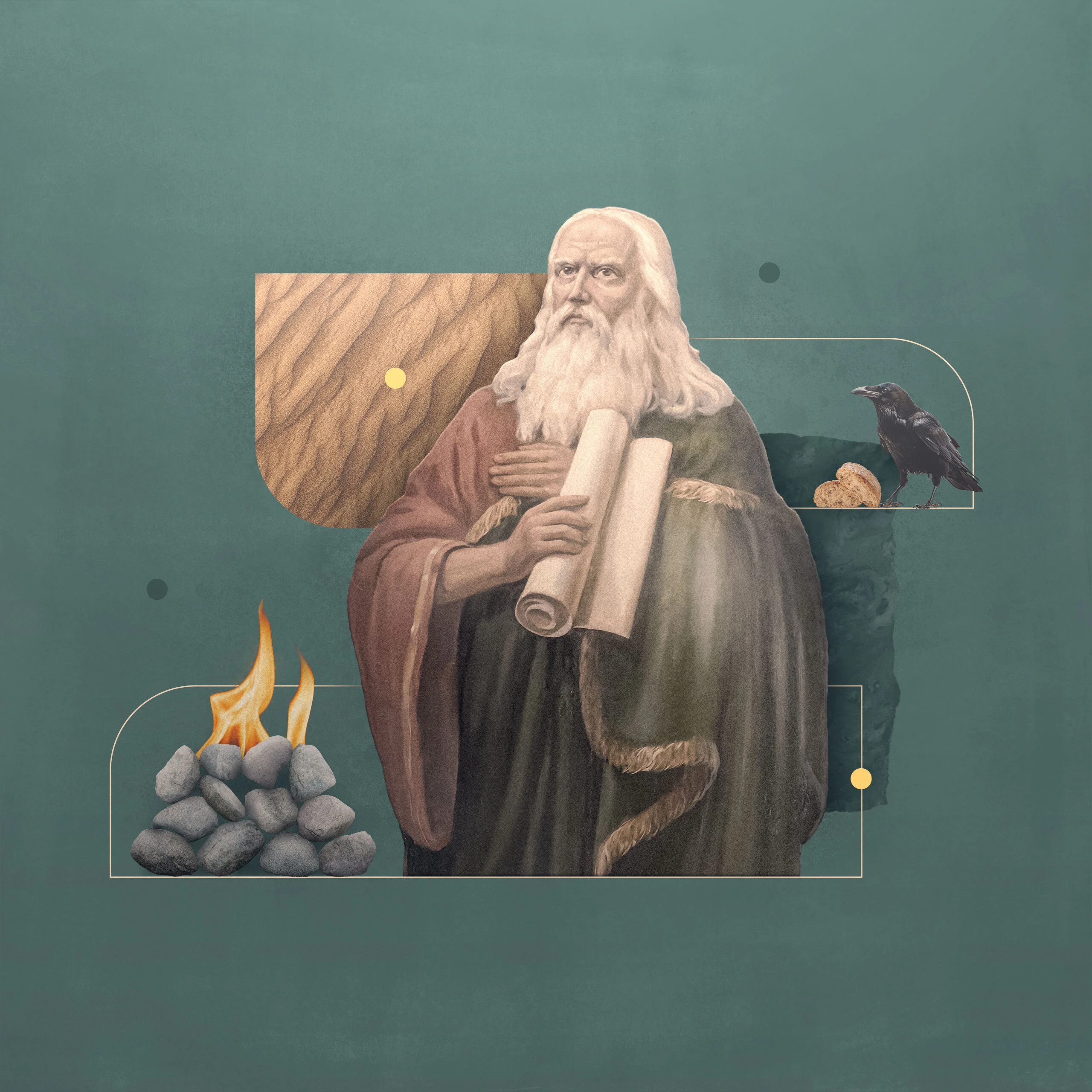
In the early ninth century BC, during the dark days of Ahab the son of Omri, from seemingly out of nowhere God raised up Elijah as His prophet to confront the Baal worship of Israel and Judah (1 Kings 16:28–17:1; 2 Chron. 21:12). But he was from somewhere—he was a Tishbite, from Tishbe in Gilead (the region of Israel east of the Jordan River). Unfortunately, we don’t know exactly where Tishbe was, and his hometown is all we know about his background. We don’t know his “origin story.” Like Melchizedek, Elijah was also “without father or mother or genealogy, having neither beginning of days nor end of life” (Heb. 7:3). He was something of a mystery man, wearing distinctive clothing (2 Kings 1:8) and standing aloof from Ahab for much of his ministry (1 Kings 17:3; 18:10), appearing and disappearing at God’s command.
2. Elijah was a bold man.
He stood against the wickedness of the leaders of God’s people (particularly Ahab) with boldness and courage. On Mount Carmel (1 Kings 18), in the vineyard of Naboth (1 Kings 21), and in the face of Ahaziah’s soldiers (2 Kings 1), Elijah was fearless. From where did his boldness come? He tells us in 1 Kings 17:1: “As the Lord, the God of Israel, lives, before whom I stand . . . ”. Elijah knew that he stood always in the presence of the covenant God of Jacob, the true King of Israel, who had called him to do His will. He knew his God, and he was jealous for the glory of his God (1 Kings 19:10). With the boldness of a lion, therefore, he displayed strength and took action (Prov. 28:1; Dan. 11:32).
Elijah knew that he was coming to a King of power, holiness, and grace, so he brought with him large petitions that only a strong God could answer.
3. Elijah was a brokenhearted man.
Unfortunately, Elijah’s reaction in 1 Kings 19 to Jezebel’s response to the “battle” of Mount Carmel is often misunderstood. Far from being bold in this instance, we are often told that he shows himself to be a fearful, self-pitying, complaining coward. But as Dale Ralph Davis insightfully notes, when we weigh the Hebrew text, read the map, listen to the angel, ponder the parallels with Moses, and hear Paul telling us in Romans 11:2 that Elijah “appeals to God against Israel” on God’s covenant mountain, we see the chapter with new eyes. Rather than viewing Elijah as quivering in fear, sinfully losing trust in God, then refusing to see his sin even when God asks him the same question twice, we should understand that Elijah is groaning in utter disappointment and despondency at seeing Israel’s continued rejection of the Lord’s word and deeds. Rather than rebuking him on Mount Sinai, God is listening to him levy a covenant accusation against Israel, encouraging him that He has a plan of judgment and salvation, and giving him a new direction in ministry, thus setting the stage for what follows in the narrative.
4. Elijah was a prayerful man.
We see Elijah speaking to God throughout his ministry: at the deathbed of the widow’s child (1 Kings 17:20–21), on Mount Carmel (1 Kings 18:36–37), and on Mount Sinai (1 Kings 19:10, 14). But in James 5:16–18, James highlights Elijah’s prayer for rain in 1 Kings 18:42—as well as his prayer that it would not rain (implied in 1 Kings 17:1). Elijah was a man “with a nature like ours” (James 5:17) and is held up for us as an example of fervent and earnest prayer (the Greek reads, “He prayed with prayer”) that accomplishes much. Elijah didn’t merely pray reactively to the circumstances happening around him; he sought God’s face proactively. He knew that he was coming to a King of power, holiness, and grace, so he brought with him large petitions that only a strong God could answer.
5. Elijah was a type.
The Bible is clear that Elijah prefigured John the Baptizer (Mal. 4:5; Luke 1:17; Matt. 11:14). Like the former, the latter had a distinctive appearance (Matt. 3:4); turned many of God’s people back to Him (Luke 1:16–17); faced a hostile political power, including a woman with murderous desires (Matt. 14:8); and anointed a successor at the Jordan River (Matt. 3:13). Just as Elijah points us to John, so Elisha points us to Jesus.
6. Elijah never died.
Like Enoch in Genesis 5:24, Elijah never died (see also Heb. 11:5). The prophet was taken up by a whirlwind into heaven, with his body still united to his soul (2 Kings 2:11). Therefore, these two men are unlike all the rest of the departed saints. One day soon, they will once again join us on earth—a new earth, in which no idolatry exists, in which righteousness dwells, and in which there are no more broken hearts.