Who Was Mark?

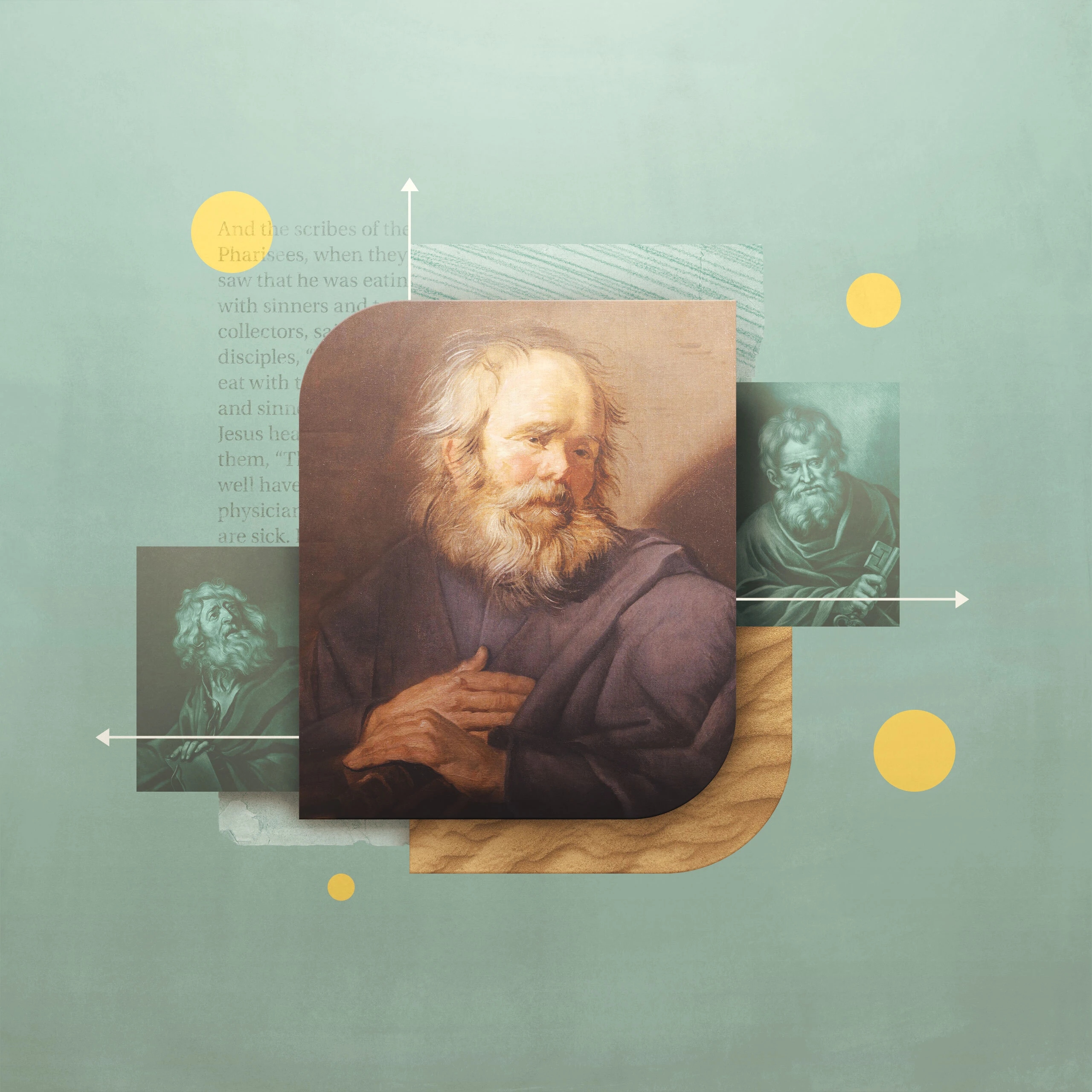
Mark (also known in the Bible as John Mark) is an important figure in the early church. As with many people from the Bible, we don’t know as much about him as we might like to know. But a careful look at the Bible’s own witness to Mark is enough to reveal his involvement in some crucial aspects of early Christian history.
Mark was apparently from Jerusalem. His mother, Mary, lived there (Acts 12:12), and Mark would later return there (Acts 13:13). It was at Mary’s house that the disciples had gathered to pray for Peter when he was thrown into prison by Herod Agrippa II, and it was to Mary’s house that Peter came in the middle of the night once he was released (Acts 12:1–17).
Another important family tie for understanding Mark is that he was the cousin of Barnabas (Col. 4:10). This provides the context for why Mark may have first accompanied Barnabas and Paul when they returned from Jerusalem to Antioch after their famine-relief trip to Jerusalem (Acts 11:27–30; Acts 12:25). Mark then accompanied Paul and Barnabas on what is known as Paul’s first missionary journey (Acts 13–14), which occurred prior to the Jerusalem Council of AD 48/49 (see Acts 15). On this first missionary journey, while at Perga in Pamphylia, Mark withdrew from Paul and Barnabas and returned to Jerusalem (Acts 13:13; 15:38). Scripture does not tell us why Mark left, but we can infer from Paul’s later refusal to take Mark along on their second missionary journey that Mark must have turned back on the first journey because of some difficulty or lack of commitment (see Acts 15:37–39).
The sharp disagreement between Paul and Barnabas about how to treat Mark led to Paul and Barnabas splitting ways. Paul took Silas and headed through Syria and Cilicia (Acts 15:41), while Barnabas took his cousin John Mark and sailed to Cyprus (Acts 15:39).
Mark’s gospel narrative about Christ is a literary masterpiece that brings together the genre of Greco-Roman biography with numerous references to the Old Testament in a unified, authoritative account of Christ’s teaching, deeds, death, and resurrection.
Not only was Mark a companion of Paul and Barnabas on the first missionary journey, and not only was he Barnabas’ cousin, but Mark was also like a son to the Apostle Peter. Circumstantial evidence for Peter’s knowledge of Mark comes in Acts 12:12, when Peter showed up at Mark’s mother’s house. But later in Peter’s life (probably the early-to-mid- 60s), Peter refers to Mark as “my son” who was in Babylon with him (1 Peter 5:13). Babylon in this instance is almost certainly a veiled reference to Rome, which opposed God’s exile people and thus correlated to Babylon in the Old Testament (see 1 Peter 1:1).
This connection with Peter and Rome also explains what Mark is most famous for—the gospel of Mark. The manuscript evidence is clear and consistent that Mark is the author of the gospel of Mark. Further, identifying Mark as the actual author of the gospel of Mark correlates to early Christian tradition (such as we find in Irenaeus of Lyons and Papias of Hierapolis) that Mark wrote his gospel under the guidance of the Apostle Peter. Mark’s gospel narrative about Christ is a literary masterpiece that brings together the genre of Greco-Roman biography with numerous references to the Old Testament in a unified, authoritative account of Christ’s teaching, deeds, death, and resurrection. Further, that the gospel of Mark was written particularly to those in Rome is an intriguing possibility and would accord with 1 Peter 5:13 that identified Peter and Mark in Rome.
There is so much more to Mark that we might wish to know, but our knowledge of this important early Christian servant is fragmentary. However, we do gain some insights into his mended relationship with the Apostle Paul. After departing from Paul and Barnabas, it may be surprising to find Paul in some of his later letters mentioning Mark positively. First, Paul tells the Colossians that John Mark sends greetings, and they should welcome him if he visited them (Col. 4:10; see also Philem. 24). Colossians was written during one of Paul’s imprisonments, and Mark apparently visited Paul while he was in prison (probably in Rome).
Second, toward the end of his life, Paul identifies Mark as very useful to him (2 Tim. 4:11). This was fitting, since Mark originally joined Paul and Barnabas to assist their ministry (Acts 13:5). Paul wants Timothy to bring Mark with him when Timothy comes to visit Paul. We don’t know why Mark left Paul in those earlier days, but Mark had not abandoned Paul in the end. Paul gave Mark a second chance, and in that we see a beautiful picture of the gospel of second chances.