Why Does the Lord’s Supper Matter?

Why do we eat food? Sometimes we eat because we are hungry. Other times, we eat because we need energy. In some instances, we eat because we need to balance nutrition levels in our body. Perhaps the easiest answer—and one we sometimes forget—is that we eat because food tastes good and we enjoy it.
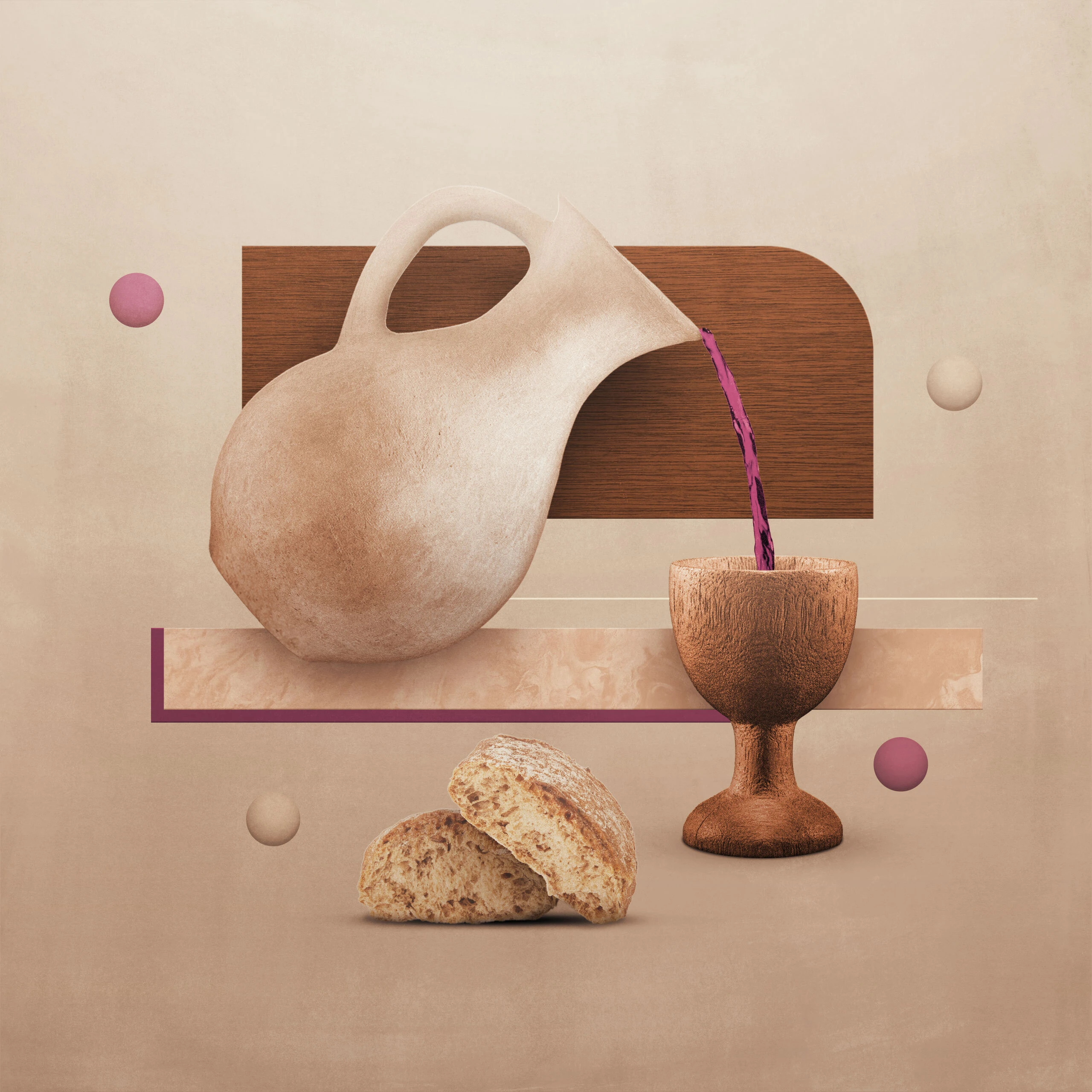
Food plays all these roles to keep us nourished. Accordingly, God has given His church the Lord’s Supper to invest in our spiritual nourishment. Hence, Westminster Shorter Catechism 96 explains that in the Lord’s Supper believers are “by faith, made partakers of his [Christ’s] body and blood, with all his benefits, to their spiritual nourishment, and growth in grace” (emphasis added). Baptism marks the Christian life’s beginning, but walking with Christ is about more than just one moment. It is about knowing Christ’s ongoing presence with us in grace to help us in all that we encounter in life. The Lord’s Supper is the meal that Christ has given His people to show us that we have His care throughout our journey with Him. We have this meal because Jesus nourishes us. What sort of nourishment does this special meal provide?
1. The Lord’s Supper teaches us about Christ.
Countless communion tables across the world read, “Do This in Remembrance of Me.” That exhortation draws from Christ’s own instruction to continue this meal to remember Him (Luke 22:18–20; 1 Cor. 11:23–25). This remembrance is not merely recalling information about Christ. Rather, it is an act of remembrance by which we “proclaim the Lord’s death until He comes” (1 Cor. 11:26). It is a meal by which we honor Christ with a clear explanation and visible illustration of His saving work on our behalf.
2. The Lord’s Supper deepens our communion with Christ.
After His resurrection, Jesus met two disciples on the road to Emmaus and had an extended conversation with them (Luke 24:13–35). As part of this encounter, He opened God’s Word to show them even what the old covenant Scriptures said about Him: “And beginning with Moses and all the Prophets, he interpreted to them in all the Scriptures the things concerning himself” (Luke 24:27). Despite how Christ opened Scripture to teach about Himself, they still did not even recognize Him. Nevertheless, following that instruction, He came to their table and “took the bread and blessed and broke it and gave it to them” (Luke 24:30). Christ’s actions were the same four actions for instituting the Lord’s Supper, showing how He was providing the sacrament for them. Then “their eyes were opened, and they recognized him” (Luke 24:31). As these disciples explained to others how they finally came to realize that the risen Christ was with them and teaching them, they described “how he was known to them in the breaking of the bread” (Luke 24:35). The Lord’s Supper is one way that Christ helps us to see Him more clearly as He works in our lives. He nourishes us by making Himself known to us in His Word and at His table.
The Lord’s Supper is the meal that Christ has given His people to show us that we have His care throughout our journey with Him.
3. Christ nourishes us through the Lord’s Supper.
Thirdly, Christ nourishes His people as He uses the supper to bind us more closely to one another in His church in contrast to the world. At the capstone of his argument concerning food issues, why we must give up rights to help fellow Christians, and why we must not partake in pagan rituals, Paul invoked the Lord’s Supper in 1 Corinthians 10:16–21:
The cup of blessing that we bless, is it not a participation in the blood of Christ? The bread that we break, is it not a participation in the body of Christ? Because there is one bread, we who are many are one body, for we all partake of the one bread. Consider the people of Israel: are not those who eat the sacrifices participants in the altar? What do I imply then? That food offered to idols is anything, or that an idol is anything? No, I imply that what pagans sacrifice they offer to demons and not to God. I do not want you to be participants with demons. You cannot drink the cup of the Lord and the cup of demons. You cannot partake of the table of the Lord and the table of demons.
Paul returns to a theme that we already saw in Luke 24, namely that the Lord’s Supper brings us closer to Christ. The cup is “a participation” in His blood and the bread is also “a participation” in His body. Heidelberg Catechism 76 helps us make sense of this claim in asking, “What does it mean to eat the crucified body of Christ and to drink his poured-out blood?” In sum,
It means
to accept with a believing heart
the entire suffering and death of Christ
and in this way
to receive forgiveness of sins and eternal life.
In other words, the supper is an act of faith to receive Christ and His benefits.
Still, Paul’s point carries further to say that the one bread means that we are one body. We are joined to Christ and joined to one another at His table. Because of this fellowship, we cannot give ourselves to participate in that which is contrary to Christ. The Lord’s Supper is Christ’s gift to nourish His people. Let us come to His table ready to have less of the world and more of Christ.